
Entertainment Memorabilia
Ralph DeLuca has been a lifelong collector of entertainment memorabilia and ephemera. He is deeply committed to preserving these treasures while fostering accessibility and a sense of community among fellow enthusiasts. Over the years, he has assisted both individuals and institutions in acquiring exceptional collections of ephemera, earning recognition for the quality and breadth of his personal collection through numerous gallery and museum exhibitions.
Driven by a desire to educate collectors and share his wealth of knowledge, DeLuca aims to serve as a valuable resource within the community. Recognizing the challenges of pricing memorabilia and ephemera, which lack the abundance of tools available for fine art, he has taken steps to promote transparency. DeLuca openly shares details of items he’s acquired, including prices and dates, aiming to guide others in assembling museum-worthy collections of entertainment memorabilia.
Vintage Photography & Movie-Related Photography: This category includes original vintage photographs taken on movie sets, behind the scenes, or promotional shoots during the golden age of cinema. These photos capture candid moments, iconic scenes, and portraits of famous actors and actresses. They offer a glimpse into the filmmaking process and are prized by collectors for their historical value and aesthetic appeal.
Original Lobby Cards: These are promotional materials distributed to movie theaters to advertise films. They typically feature images and information about the movie and its cast. Original lobby cards are highly collectible due to their historical significance and often feature iconic scenes from the films.
Original Vintage Concert and Music Posters: These are posters created to advertise music events, concerts, and performances. They often feature bold graphics, vivid colors, and striking typography designed to grab the attention of potential attendees. Vintage music posters from the 1920s to the 1960s cover a wide range of genres, including jazz, blues, rock ’n’ roll, country, and more.
Ralph collects:
- original lobby cards
- original movie posters
- movie memorabilia, including old movie photos / stills
- boxing style concert posters
Vintage Photography & Movie Related Photography

CLASSIC COLLECTIBLE PHOTOS
Ralph has acquired vintage photography and photographic archives from various sources around the world. His collection consists of vintage photographic prints, negatives, transparencies, glass slides and contact sheets on subjects such as:
- Celebrity and Hollywood Portraits
- Photojournalism
- Stock Photography
- Sports
- Crime
- Historical
- War
- All forms of Music
- Movies, Film and Entertainment
United Artists Group Photo

Barbara Stanwyck

The Wizard of Oz

Original Movie Photos and Film Stills
From the Silent Period through Golden Age of Movies, the main purpose of film stills /publicity stills was to assist studios not only in advertising, but also in promoting their new films and stars. A “still” photographer was hired to work on set, but was not directly involved in the making of the film. A number of “still” photographers became well known and their “stills” are now sought out by collectors such as myself. The movie studio included these “still” images of movie scenes and glamour portraits in press kits, sent to movie theaters to help them promote the studio’s latest offerings. They were also used to publicize the film and actors via magazines, newspapers and other media. For collectors the most popular kinds of film stills are those portraying glamour, menace, or gag interpretations. Since there is a huge market specializing in both standard re-issues and later printings, as well as fakes, it can sometimes be very difficult to identify original, collectible movie photography and film stills.
Examples of Original Movie Portrait Stills
Carole Lombard by Edwin Bower Hesser

Tod Browning by Ruth Harriet Louise

Hedy Lamarr by Robert Coburn

Clara Bow by Eugene Robert Richee
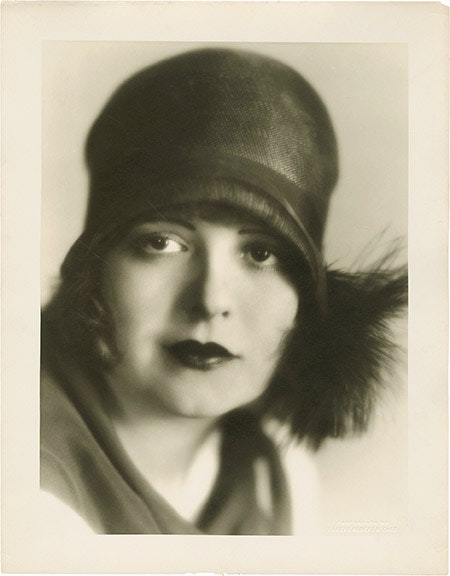
Step back in time and immerse yourself in the allure of Hollywood’s golden age, a period spanning from 1926 to 1949, where the silver screen radiated with timeless beauty and unparalleled charm. Delve into the captivating world of vintage Hollywood photography and portraits, where every shot encapsulated the essence of glamour, sophistication, and timeless allure.
During this era, Hollywood’s most iconic stars graced the screens and captured the hearts of audiences worldwide. From the captivating allure of Greta Garbo to the dashing charm of Cary Grant, these legendary figures were immortalized through the lens of talented photographers who meticulously crafted each frame to perfection.
The black-and-white publicity photographs of the Depression era exude a unique charm, blending light, shadows, make-up, and props to create mesmerizing compositions that stand the test of time. Every detail was meticulously curated, from the elegant costumes to the subtle nuances of expression, transporting viewers to a bygone era of elegance and grace.
For avid movie memorabilia collectors, these vintage Hollywood photographs hold an undeniable allure. They offer a glimpse into a world of unparalleled glamour and sophistication, where dreams were spun on celluloid and stars shone brighter than ever before. Each photograph is a window into the past, a timeless piece of cinematic history waiting to be cherished and admired.
As a connoisseur of exceptional movie photography from Hollywood’s golden age, Ralph is constantly on the lookout for those rare gems that capture the essence of this extraordinary era. Whether it’s the iconic portraits of Marilyn Monroe or the mesmerizing compositions of Humphrey Bogart, each photograph tells a story and evokes emotions that transcend time.
During Hollywood’s golden age, the photographers Ruth Harriet Louise, Edwin Bower Hesser, Robert Coburn, and Eugene Robert Richee played instrumental roles in shaping the visual identity of the era’s most iconic stars. Each of these photographers brought their unique style and vision to their craft, leaving an indelible mark on the world of Hollywood photography.
Ruth Harriet Louise was one of the first female photographers to gain prominence in Hollywood during the silent film era. She was renowned for her ability to capture the essence and personality of her subjects, particularly female stars. Edwin Bower Hesser was celebrated for his striking and glamorous portraits of Hollywood stars. His photographs exuded a sense of elegance and sophistication, often featuring dramatic lighting and meticulous attention to detail. Robert Coburn was recognized for his versatility as a photographer, adeptly capturing the essence of both male and female stars. Eugene Robert Richee was known for his glamorous and stylized portraits that epitomized the fantasy and allure of Hollywood’s golden age.

DeLuca also collects vintage photographs, negatives and transparencies by specific photographers such as:
- James Abbe
- Diane Arbus
- Richard Avedon
- Max Munn Autrey Decades: 1920s | 1930s
- Bacharach
- Russell Ball
- Matthew Brady
- Clarence Sinclair Bull
- Cecil Beaton
- M.I Boris Decades: 1920s | 1930s
- Coburn
- Otto Dyar
- Alfred Eisenstaedt
- John Engstead
- Freulich
- Milton Green
- Hurrell
- Alfred Cheney Johnson
- Ruth Harriet Louise
- Man Ray
- Irving Penn
- Eugene Robert Richee
- Walter Seely Decades: 1920s | 1930s
- Steichen
- Bert Stern
- Alfred Stieglitz
- Weegee
- Witzel Decades: 1910s | 1920s
- Scotty Welbourne
- Edward Weston
- Lazlo Willinger
Select photo collections from:
- Stock Photo Houses
- Press Agencies
- Newspaper Photo Morgues
- Color Slides
- Magazine Photo Archives
- Media Brokers
- Daily Newspapers
- Weekly Newspapers
- Advertising Agencies
- Movie Studios
- Libraries
- Colleges and Institutions
- Museums
- Booking Agents
- Private Collectors
- Authors
- Photographers
- Stock Agencies
- Picture Services
- Private and Public Archives
- Photo Leasing Companies

ORIGINAL VINTAGE MOVIE LOBBY CARDS
Lobby Cards were found in the lobby of theaters promoting the feature movie. They offered small snap shots of scenes from the film. Lobby cards are great to collect since they are relatively small in size and much easier to store than some large movie posters. The visual variety of lobby card designs is simply amazing.

Key Largo

Lobby Card (LC)
Lobby cards are usually 14" x 11". They were printed on light cardstock. These small posters, originally created to appear in a movie theater’s lobby, were created in sets of eight.
The typical original lobby set consists of one Title Card (TC) which has a special design usually depicting all key stars and listing credits. It was intended to represent the entire film rather than a single scene. The remaining seven cards of a set known as Scene Cards (SC) would depict a particular scene). Lobby cards are no longer used in the US, but are still produced occasionally for the overseas market.
In addition to the regular sized lobby cards there are also jumbo lobby cards and mini lobby cards.
- Jumbo Lobby Cards (JLC) are 14" x 17". They were made before 1940. Today you will usually find a single Jumbo lobby card for sale. It is extremely rare to find JLC as a set.
- Mini Lobby Cards (MLC) are 8" x 10".
Below are examples of lobby cards
Ralph has collected
A Night at the Opera

Animal Crackers

King Kong

The Playhouse

College

Animal Crackers

The Unholy Three

The Round-Up

Classic Vintage Concert
or Music Posters

Music concert posters have been used to advertise artists since the earliest public concerts or shows. Original vintage music and concert posters and handbills from the 1920s to the 1960s are highly sought-after memorabilia collectibles. These music and concert posters from this period often represent significant moments in music history. They advertise performances by legendary artists and bands such as Elvis Presley, The Beatles, Jimi Hendrix, and Duke Ellington. Each poster tells a story of a particular event, venue, or tour, providing valuable insights into the evolution of music and its impact on society. Many vintage posters and handbills from this era were meticulously designed by skilled artists, often using techniques such as lithography, silk screening, or letterpress printing.
These posters feature striking graphics, bold typography, and vibrant colors that capture the imagination and evoke the spirit of the music scene at the time. Some renowned artists, like Wes Wilson, Stanley Mouse, and Alton Kelley, became famous for their iconic concert poster designs.
Unlike contemporary posters that are often mass-produced, vintage music and concert posters were typically printed in smaller quantities and distributed locally to promote specific events. As a result, surviving originals are relatively scarce, making them highly coveted by collectors.
Ralph collects original vintage music and concert posters and handbills, from the 1920s - 1960s.
MORE INFORMATION ON ENTERTAINMENT EPHEMERA
DeLuca is not a dealer or broker in this area; Ralph advises clients in amassing important collections of ephemera, drawing experience from his personal journey as a collector creating one of the world’s best collections.
If you are interested in building a world-class collection of ephemera or need assistance correctly bringing your collection to market to sell, please contact DeLuca.
Determining whether a concert poster is genuine or a phony requires expertise and experience. DeLuca can help you determine the authenticity of your concert/music poster and point you in the right direction to obtain an authorized appraisal. By sourcing independent appraisers, DeLuca guarantees impartiality for his clients, as these experts harbor no vested interest in the assessed property.
In determining an item’s authenticity, where and how you acquired your vintage concert poster or other music entertainment memorabilia is important. For instance, if a person acquired a Jerry Lewis music poster from the estate of the manager of the artist versus at a garage sale in his/her mother’s neighborhood outside of Lansing, Michigan, DeLuca would be more inclined to believe it might be genuine. However, there are a number of other factors to be considered when determining the authenticity of a piece.
It is also important to check if the poster was printed before the event. A genuine concert poster would have been used in advertising the concert, thus any poster printed after the event would be a fraud or just a commemorative poster.
There are a lot of bootleg posters within the marketplace. As an experienced collector, Ralph has seen his share of “counterfeit”m “bootleg”, “knock-off”, and commemorative music concert posters that sellers believe are genuine.
The six concert posters below were all purchased by Ralph DeLuca.

Ralph collects original music posters or memorabilia by these artists
- Billie Holiday
- Buddy Holly
- Cab Calloway
- Duke Ellington
- Elvis Presley
- Erskine Hawkins
- Fats Waller
- Frankie Lymon
- Hank Williams
- Jack Teagarden
- Jackie Wilson
- James Brown
- Jerry Lee Lews
- Johnny Cash
- Lionel Hampton
- Louis Jordan
- Lowell Fulson
- Marvin Gaye
- Ray Charles
- Roy Milton
- The Beatles
- The Rolling Stones
- Thelonius Monk


Ralph also collects these types of vintage concert items:
- Original Vintage Music and Concert Posters and Handbills, from the 1920s - 1960s (All Sizes - Any Condition!)
- Jazz posters, Blues posters, R&B posters, Soul posters, Rock posters, Country posters, and Gospel music posters - vintage music posters of all types!
- Boxing Style Concert Posters
- Cardboard Concert Posters
- Psychedelic Posters
- Personal Apperance Posters for Stand-Up Comedians
- Record Store Promo Posters
- Any 1950s Rock & Roll Show Posters
- Any early R&B concert posters
- Any 1950s or 1960s Black Music Posters
- Any Early or Mid 60s Folk Music Posters
- Any Motown or Motortown Review Posters
- Any Little Stevie Wonder concert posters
- Old Tour Posters
- Vintage Gig Posters
- Posters for Shows presented by the Shaw Artists corporation
- Posters for shows represented by Joe Glaser
- Any Woody Guthrie concert posters
- Any 60s Beatles, Rolling Stones or British Invasion Posters
- Any Early 60s Surf Posters
- Acid Tests, Trips Festivals, Love-Ins
- Early Bob Dylan concert Posters
- Early Psychedelic Posters
- Any Biggest Show of Stars Posters
- Any Elvis Presley concert Posters
- Any concert posters printed by Globe Posters of Baltimore
- Any posters printed by Colby Poster Printing
- Any poster printed by Murray Poster Printing Co. of New York City
- Any posters printed by Woolever Press of Los Angeles
- Any posters printed by TILGHMAN PRESS of Oakland
- Billie Holiday
- Charlie Parker
- Hank Williams
- Any posters of Fantabulous Rock ’n’ Roll Shows
- Any Buddy Holly concert posters
- Any boxing style Otis Redding poster
- Any multi-artist cardboard concert posters from the ’50s and ’60s
- Howlin Wolf
- Elmore James
- Any early Jerry Lee Lewis appearance posters
- Any Blues concert Posters

at Bellagio Gallery of Fine Art
The exhibition at the Bellagio Gallery of Fine Art consisted of 44 vintage advertising posters for films and performances that featured African American actors and musicians dating back to the 1920s up to the 1970s. Grammy Hall of Fame singer Aretha Franklin is featured in the collection along with “The King of Soul” Otis Redding and the great American jazz composer and pianist Thelonius Monk.